
Spring Wheat Under Pressure: What Drought Means in the Final Weeks of the Season
American Prime Sustainable Solutions
Spring wheat across the Northern Plains is moving into the last stretch of the 2026 growing season under growing moisture stress. The timing matters. By late July, most fields are at or near grain fill, the stage when heat and dryness can reduce kernel size, test weight, and final yield. Some fields may still benefit from timely August moisture, but many losses tied to earlier stress are already set. For growers, cooperatives, grain handlers, and agronomy teams, the next few weeks are less about hoping for a full recovery and more about understanding where risk is building, where quality may be affected, and how to plan for an uneven harvest.
Drought Pressure Is Growing as the Crop Nears Harvest
According to USDA’s Agricultural Commodities in Drought analysis, 42% of U.S. spring wheat production is now located in drought-affected areas. That is a meaningful share of the crop at a time when yield potential is especially sensitive to continued heat and lack of rainfall.
The regional picture is not uniform, but the trend is clear. North Dakota, Montana, South Dakota, and Minnesota remain the center of concern. USDA’s Crop Progress report shows that while some areas are holding up better than others, crop conditions have weakened in several key production states. At the same time, most of the crop has already headed, which means the season is far enough along that field-by-field differences now matter more than broad regional averages.
This is also where the business implications begin to widen. A drought headline may describe the region, but it does not tell a producer which field is declining fastest, or tell an elevator which deliveries may arrive first with lower test weight. Operational decisions still have to be made at the field and county level.
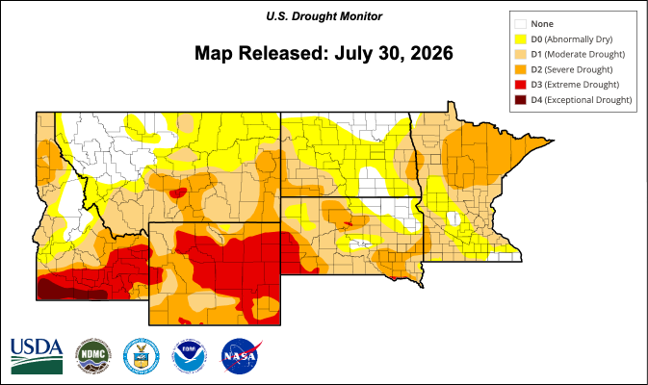
Figure 1. U.S. Drought Monitor for the Northern Plains and surrounding spring wheat region (map released July 30, 2026). Source: USDA / NDMC / NOAA / NASA
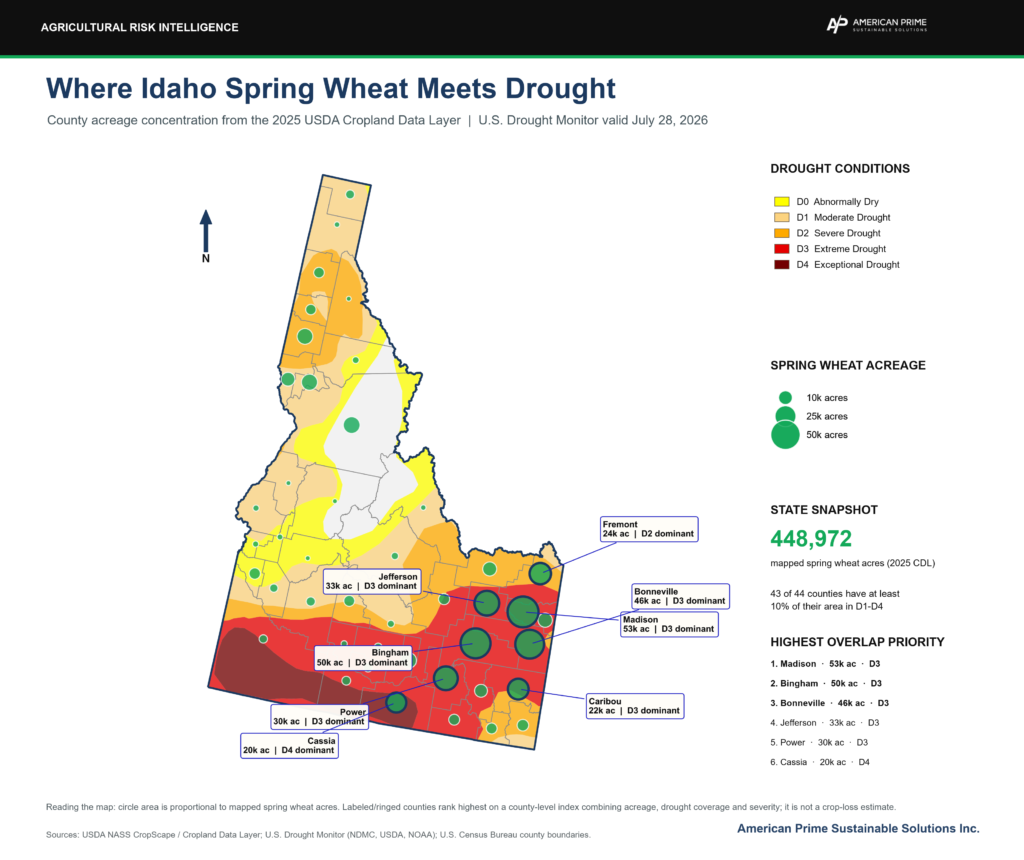
Figure 2: U.S. Drought Monitor and Spring Wheat Cropland Data in Idaho
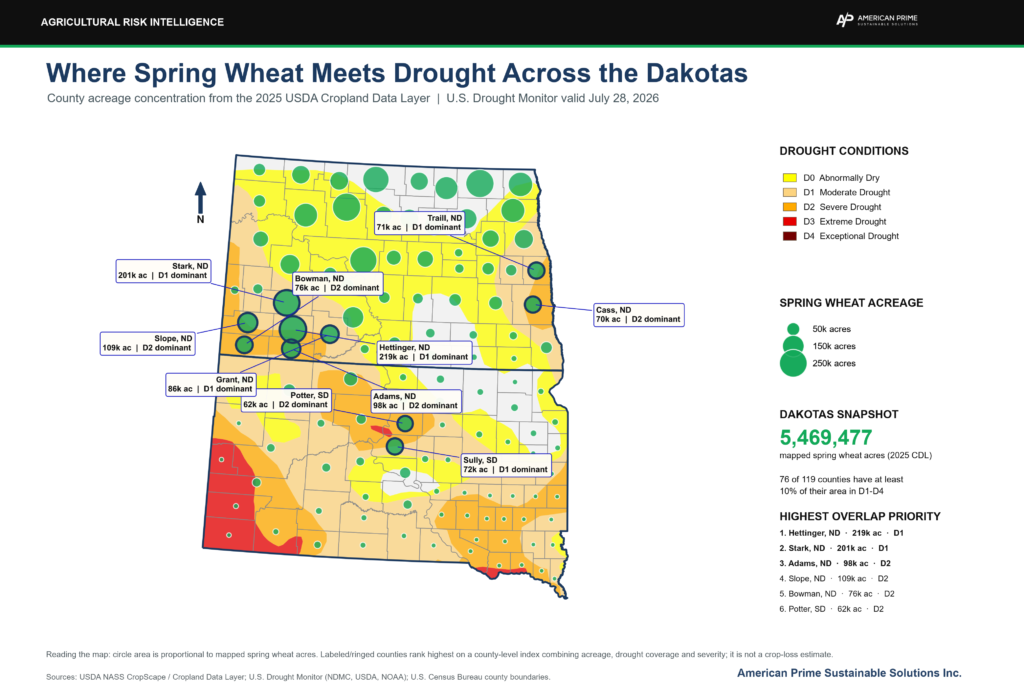
Figure 3: U.S. Drought Monitor and Spring Wheat Cropland Data in North and South Dakota
What Late-Season Rain Can Still Do—and What It Cannot
At this stage of the season, the question is not simply whether rain would help. The more useful question is what part of yield and grain quality can still be protected. Spring wheat grain fill is the period when kernels accumulate most of their final weight. When drought and high temperatures hit during this window, the crop often matures too quickly. The result is smaller kernels, lower test weights, and weaker grain quality.
If a field has not yet reached physiological maturity and still has active green tissue, timely moisture may help preserve kernel weight and slow down stress-driven maturity. In those cases, rain can still support grain filling and may help protect quality.
But there are real limits. Rain arriving late cannot restore tillers that were lost earlier in the season. It cannot recreate kernels that were never set during flowering, and it cannot fully reverse grain-fill losses that have already occurred. A short-term weather improvement may help conditions on paper, but it does not automatically mean the crop has regained the yield potential it already lost.
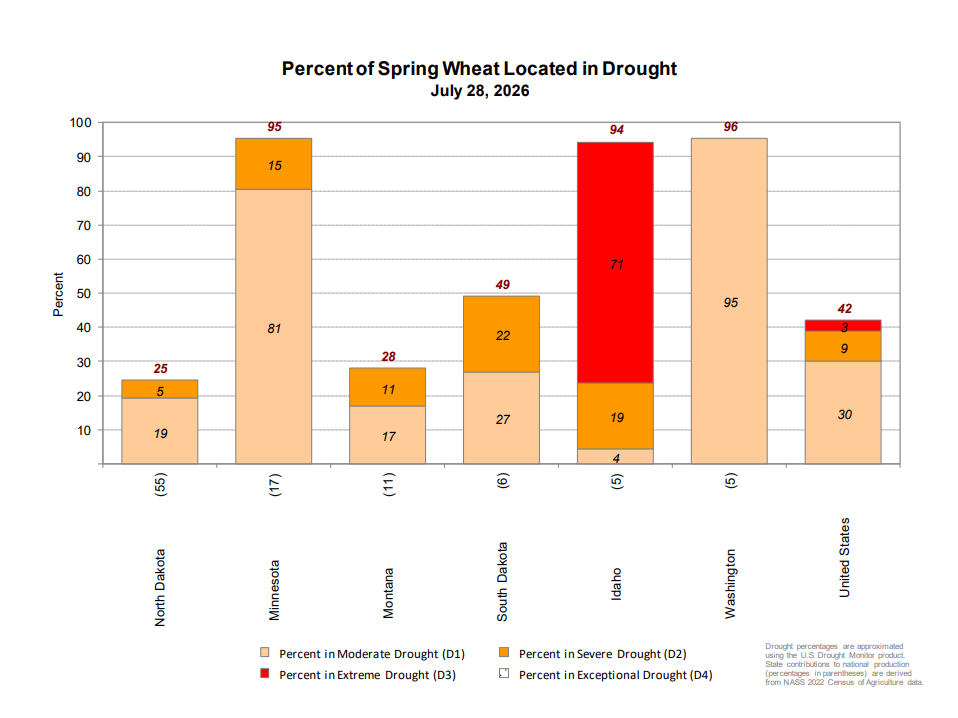
Figure 4. U.S. Drought Monitor Percent of Spring Wheat Located in Drought (graph released July 30, 2026). Source: USDA / NDMC / NOAA / NASA
Why This Matters Beyond the Farm Gate
For individual producers, the immediate concerns are straightforward: protecting grain quality where possible, sequencing harvest wisely, and staying realistic about where yield is already locked in. For organizations working with wheat at scale, the stakes are broader.
Cooperatives, grain companies, input retailers, and agronomy teams need to know where stress is building first so they can prioritize scouting, advisory support, storage planning, and harvest logistics. Fields under heavier stress may dry down faster, reach maturity sooner, and deliver grain with more variable quality. That affects not only the farm, but also the elevator, the merchandiser, and the organizations coordinating movement and storage across a wider footprint.
In other words, drought intelligence is not just a weather issue. It is also a logistics issue. When conditions shift quickly, organizations need a clearer picture of which acres are most at risk and where operational bottlenecks are most likely to show up.
Where APSS Fits
This is where American Prime Sustainable Solutions can bring value. The AP Crop Intelligence platform is built to help agricultural organizations move beyond broad regional headlines and focus on the fields that need attention first. By combining environmental monitoring with field-level analysis, APSS helps users spot developing stress, track changing conditions across a portfolio of fields, and make better-timed operational decisions.
For wheat producers and the organizations that support them, that can mean a stronger view of where drought is intensifying (such as in North and South Dakota), where crop stress is accelerating, and where harvest or grain-handling decisions may need to be adjusted. It does not eliminate weather risk, and it does not replace agronomic judgment. What it does provide is better visibility at a moment when timing matters.
Bottom Line
The 2026 spring wheat crop is entering its final weeks under growing pressure. Some fields may still benefit from late moisture, especially where grain fill is still active. But for many operations, the more immediate priority is understanding where stress has already reduced yield potential and where grain quality may be at risk.
For growers, this is the time to stay close to field conditions and realistic about what the crop can still do. For cooperatives and other organizations serving wheat country, it is the time to translate drought information into practical decisions about scouting, communication, harvest, and grain flow. The producers and businesses that manage this period best will be the ones working from a clear picture of conditions on the ground, not just a general sense that the season turned dry.
Sources and Reference Links
- USDA Agricultural Commodities in Drought (Ag in Drought) report: https://www.usda.gov/sites/default/files/documents/AgInDrought.pdf
- USDA NASS Crop Progress and Condition reports: https://www.nass.usda.gov/Charts_and_Maps/Crop_Progress_&_Condition/
- U.S. Drought Monitor: https://droughtmonitor.unl.edu/
- USDA National Agricultural Statistics Service (general access point for crop data): https://www.nass.usda.gov/
- USDA Cropland Data Layer: https://nassgeodata.gmu.edu/CropScape/
- University of Minnesota Extension: Spring Wheat Growth and Development Guide: https://extension.umn.edu/growing-small-grains/spring-wheat-growth-and-development-guide