
Winter Wheat at a Crossroads: Market Opportunity Meets Weather Risk
Authored by the American Prime Sustainable Solutions team, with insights and technical feedback from Dr. Jeff Basara
For U.S. winter wheat producers, the 2026/2027 season is shaping up around a difficult combination of opportunity and risk. Global wheat markets have strengthened as renewed disruption to Black Sea grain flows raises concerns about the reliability of Russian and Ukrainian exports. At the same time, producers across the Southern Great Plains are confronting dry soils and the threat of flash drought just as planting decisions move to the forefront.
That creates a complicated question for growers: when stronger wheat prices increase the potential reward for planting, how much weather and establishment risk should an individual operation be willing to take? The answer depends increasingly on what is happening not simply across a state or county, but within the producer’s own fields.
Winter wheat producers across the Southern Great Plains are entering the 2026–2027 growing season under difficult and uncertain conditions. After a historically poor hard red winter wheat crop in 2026, the region now faces the risk of another challenging year unless timely fall moisture improves planting and establishment conditions. The Southern Great Plains, including Kansas, Oklahoma, the Texas Panhandle, eastern Colorado, and parts of New Mexico, remains the core of U.S. hard red winter wheat production. This wheat class is essential for bread flour and other milling uses, making crop conditions across the region important not only for producers, but also for grain markets, millers, food companies, and consumers.
The warning signs are already clear. USDA’s August 2026 Wheat Outlook estimated total U.S. wheat production at 1.531 billion bushels, the lowest since 1970/71. Hard red winter wheat production was forecast at only 463 million bushels, the lowest level since 1957/58. USDA attributed the weak crop largely to declining acreage and widespread drought impacts across the Great Plains. That poor 2026 crop matters because the new season is not beginning from a neutral baseline. Many producers are preparing to plant into depleted soil moisture, reduced financial flexibility, and lingering uncertainty about whether the region can support strong crop establishment. In drought-affected areas, fall planting becomes a difficult decision: plant into dry soils and wait for rain, delay planting, or reduce acreage if the risk appears too high.
Flash Drought Impact on Winter Wheat
Successful winter wheat production depends heavily on fall conditions. Adequate moisture during planting supports germination, root development, tillering, and enough early growth to survive winter dormancy. When soils are dry, emergence can be delayed or uneven. Thin stands are more vulnerable to winterkill, wind erosion, grazing stress, and spring drought. Even if precipitation improves later, poor establishment can limit yield potential for the rest of the season.
A major concern this fall is ongoing flash drought across the winter wheat region. Flash droughts develop rapidly when below-normal precipitation coincides with unusually warm temperatures, high atmospheric evaporative demand, low humidity, and persistent winds. In the Southern Great Plains, these conditions can emerge quickly as demonstrated by rapid depletion of soil moisture during August. For winter wheat, late summer and fall flash drought is especially damaging because it strikes during a foundational growth period. Rapid drying after planting can interrupt germination, reduce seedling vigor, limit early root development, and suppress tiller formation. Plants may enter winter with insufficient biomass, weak crowns, and shallow root systems. Further, unlike longer-term droughts, flash drought can sharply reduce top-soil moisture over days to weeks, leaving producers with little time to respond. These early stresses can reduce the number of viable heads per acre, a key component of final yield. Recent research has shown that when flash drought occurs during the period spanning July through October the result is significantly reduced yields at harvest.
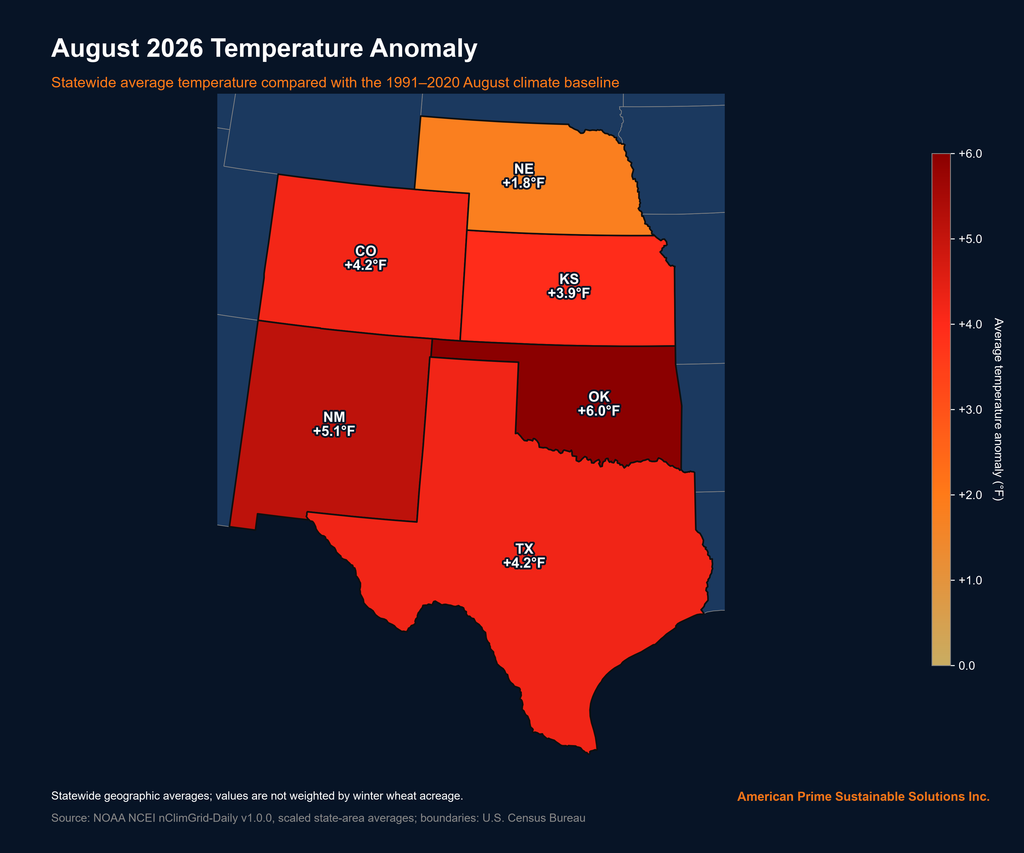
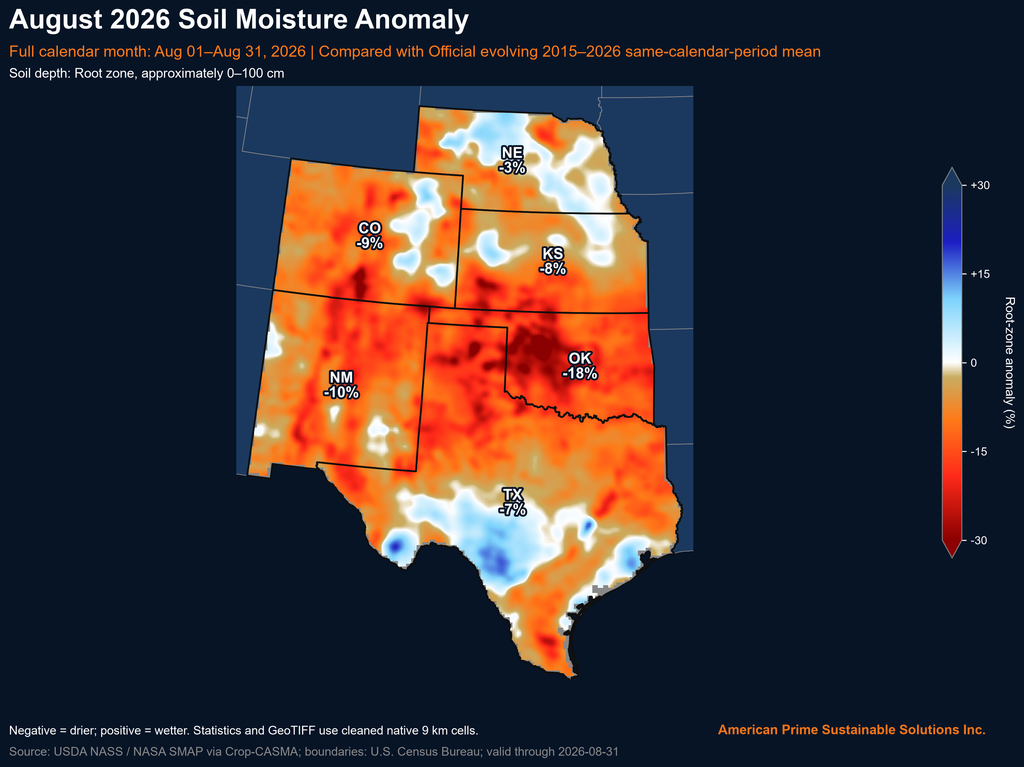
The impacts often carry into spring. Poorly established stands have less capacity to benefit from later precipitation because plant populations are uneven and root systems are underdeveloped. Thin stands also expose more bare soil, increasing evaporation, wind erosion, and vulnerability to temperature extremes. Even with improved spring weather, the crop may not fully recover if fall tillering and crown development were compromised.
Environmental and Market Outlooks
Recent drought conditions heighten these concerns. The U.S. Drought Monitor reported late-summer dryness and drought degradation across parts of the southern Great Plains, including southern Kansas, western Oklahoma, the Texas Panhandle, and eastern New Mexico. The report also noted above-normal temperatures and very limited precipitation across the South, with extreme to exceptional drought persisting in parts of western Oklahoma and the Texas Panhandle.
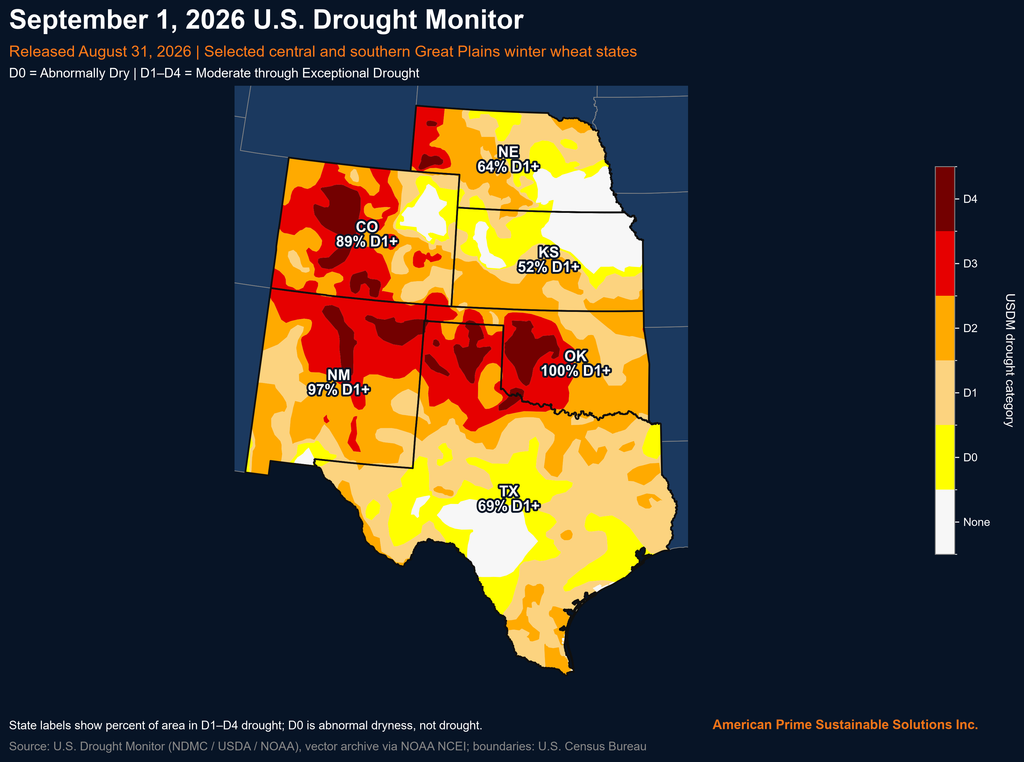
There is still room for improvement. A favorable pattern of September and October rainfall could recharge topsoil moisture and support emergence. Repeated moderate rainfall events would be more beneficial than isolated heavy downpours, especially where subsoil moisture remains depleted. A strong start would not remove all risk, but it would give the crop a better chance to enter winter with adequate stands and root systems.
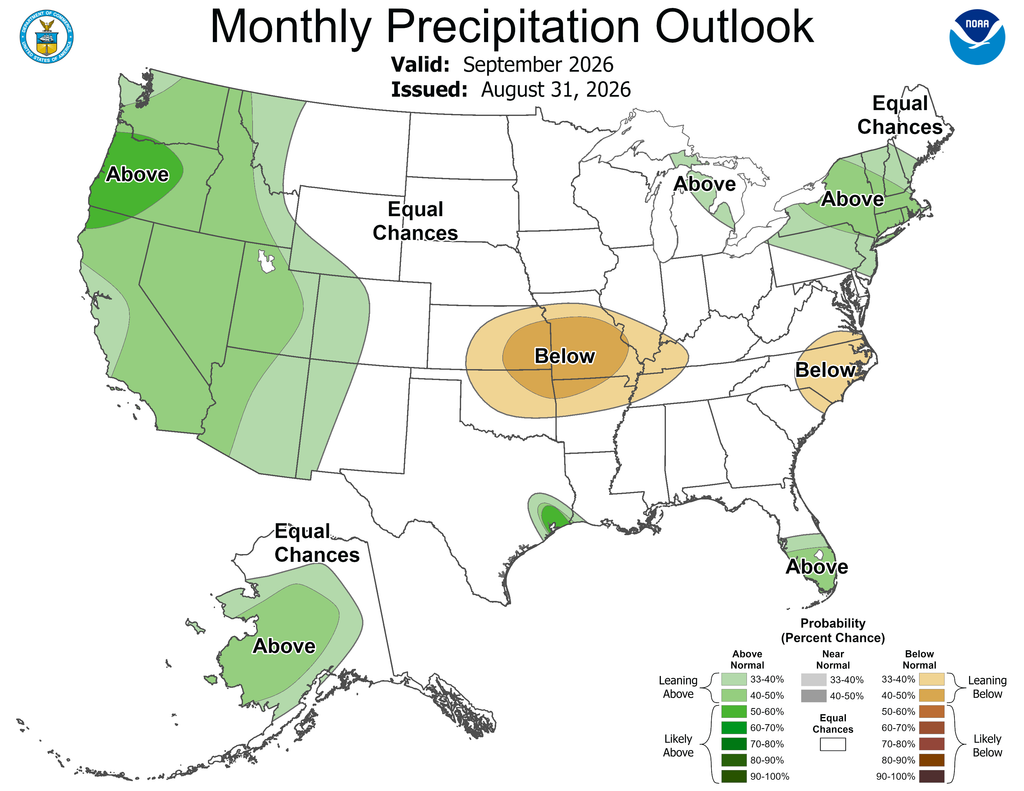
Figure 4. Monthly Precipitation Outlook for the United States (map issued August 31, 2026; valid September 2026). Source: NOAA / National Weather Service / Climate Prediction Center.
The market backdrop adds urgency. USDA projected tighter U.S. wheat supplies for 2026/27, with ending stocks down 22 percent from the previous year and the season-average farm price raised to $6.20 per bushel. Higher prices may encourage planting, but they do not fully offset the risks of drought, poor stands, abandonment, and high input costs.
Globally, wheat markets are also sensitive to production and trade disruptions. USDA noted that heat and drought reduced yield expectations in parts of Europe, while conflict-related disruptions continued to affect Black Sea wheat exports. In that context, the Southern Plains crop takes on added importance. A recovery in hard red winter wheat production would help stabilize U.S. supplies, while another drought-affected year could keep pressure on prices and availability. The 2026/2027 winter wheat crop is therefore entering a high-risk window. Key indicators to watch include fall precipitation, soil moisture recovery, evaporative demand, wind events, planting progress, emergence quality, winter survival, and early spring drought conditions. Flash drought monitoring should be central to that assessment because rapid-onset drying during the fall can reduce yield potential before the crop reaches dormancy.
For now, winter wheat across the Southern Great Plains is not a failed crop, but it is a vulnerable one. The coming weeks will determine whether the region begins rebuilding after a historically weak year or whether drought, including the threat of fall flash drought, continues to pressure one of the nation’s most important wheat-producing landscapes.
A Stronger Market Signal, but a Harder Planting Decision
The market incentive to pay closer attention to winter wheat has strengthened rapidly. Renewed attacks on ports, grain terminals and commercial vessels in the Black Sea region have disrupted exports from both Russia and Ukraine and pushed international buyers toward alternative origins. By early September, Chicago wheat futures had risen sharply as buyers sought more reliable supplies outside the region.
For U.S. producers, that shift creates a stronger price signal at exactly the time acreage decisions are being made. Reduced reliability of Black Sea supply can increase the strategic importance of wheat from the United States and other exporting regions, potentially making additional winter wheat acres more attractive. But a stronger market does not eliminate production risk. Across the Southern Great Plains, the central constraint remains whether individual fields have enough moisture, and a favorable enough near-term weather outlook, to establish a viable crop.
That tension between market opportunity and agronomic risk may define the 2026/2027 season. Higher prices can improve the potential return, but planting into inadequate soil moisture can expose producers to poor emergence, weak stands, abandonment risk and additional input costs. In other words, the market may be encouraging producers to plant at the same moment that weather conditions are demanding greater precision in deciding where, when and how much to plant.
The Decision Has to Be Made at the Field Level
In a season like this, statewide or even county-level conditions are not enough to support a planting decision. Soil moisture, recent rainfall, temperature, evaporative demand and crop establishment risk can vary substantially from one field to another. The decision to plant, delay planting or reconsider acreage therefore needs to be grounded in information that reflects the conditions of the specific field.
This is where the American Prime Intelligence Platform can become a practical decision-support tool. By bringing together precise field-level information, weather intelligence and remote-sensing insights, the platform is designed to help producers understand what is happening in their own fields and evaluate risk with greater precision than broad regional averages alone can provide. Headquartered in Oklahoma, American Prime works at the heart of the Southern Great Plains, where winter wheat is a critical part of the agricultural landscape. Our team stays closely connected with producers and the conditions they face in the field, combining that regional perspective with weather, market and field-level intelligence.
When commodity markets are offering opportunity, but weather is increasing uncertainty, access to precise, field-specific intelligence is more than an operational advantage. It can become an important part of resilience, competitiveness and better-informed decision-making.
Sources:
- USDA Wheat Outlook: August 2026 WHS-26h.pdf
- US Drought Monitor Current Map | U.S. Drought Monitor
- Dryness meets opportunity in US wheat country | World Grain